Model
Lay out the work as a visual flow — agents, people, and systems, on one BPMN canvas.
The platform
AI agents are powerful — but on their own, you can't trust them in production. An orchestration engine puts agents inside a reliable, auditable process, alongside the people and systems they work with.
Why an engine at all
The same agent behaves very differently with an orchestration engine around it. Flip the switch:
The idea
The engine coordinates the work end-to-end and keeps the whole thing governed, audited, and open. No black box.
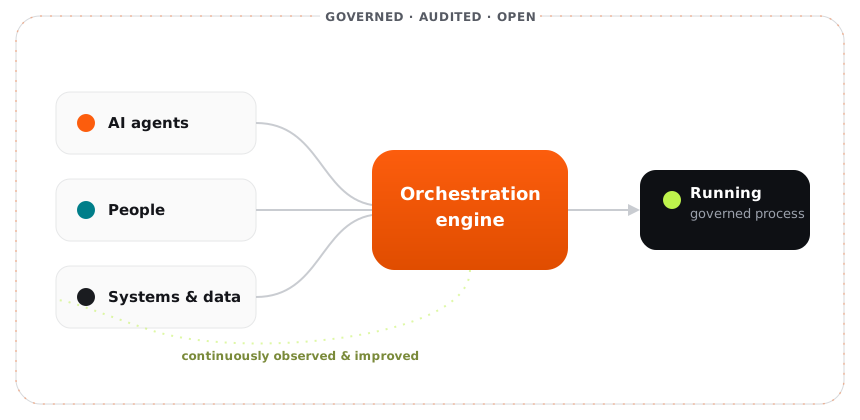
How the engine works
Lay out the work as a visual flow — agents, people, and systems, on one BPMN canvas.
The engine executes it: calling agents, routing tasks to people, connecting every system.
Watch every instance live. Every step is traced, timed, and auditable.
See where things slow down, then refine the flow — or let ProcessOS do it for you.
The key idea
ProcessOS blends both in one process — and keeps a human in the loop wherever the stakes demand it.
What the engine does
An open, visual standard the whole team can read — not code only engineers understand.
Call any LLM or agent framework as a governed step in the flow.
Route approvals and exceptions to the right people, with forms and SLAs.
500+ prebuilt connectors for ERP, CRM, ITSM, and your own APIs.
DMN decision tables for the logic that must be exact and explainable.
Live execution, full history, and an audit trail on every decision.
See it run
Describe the outcome